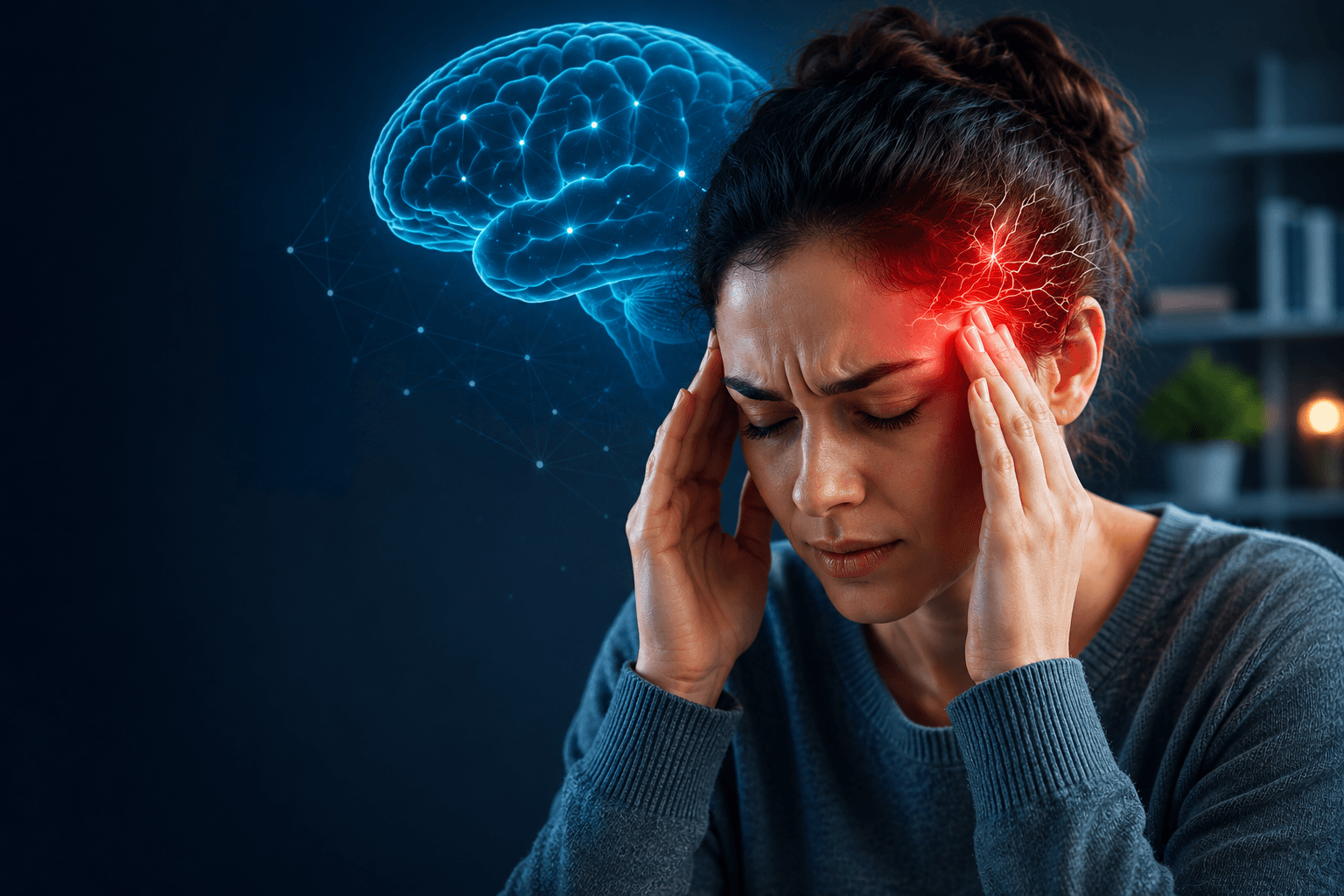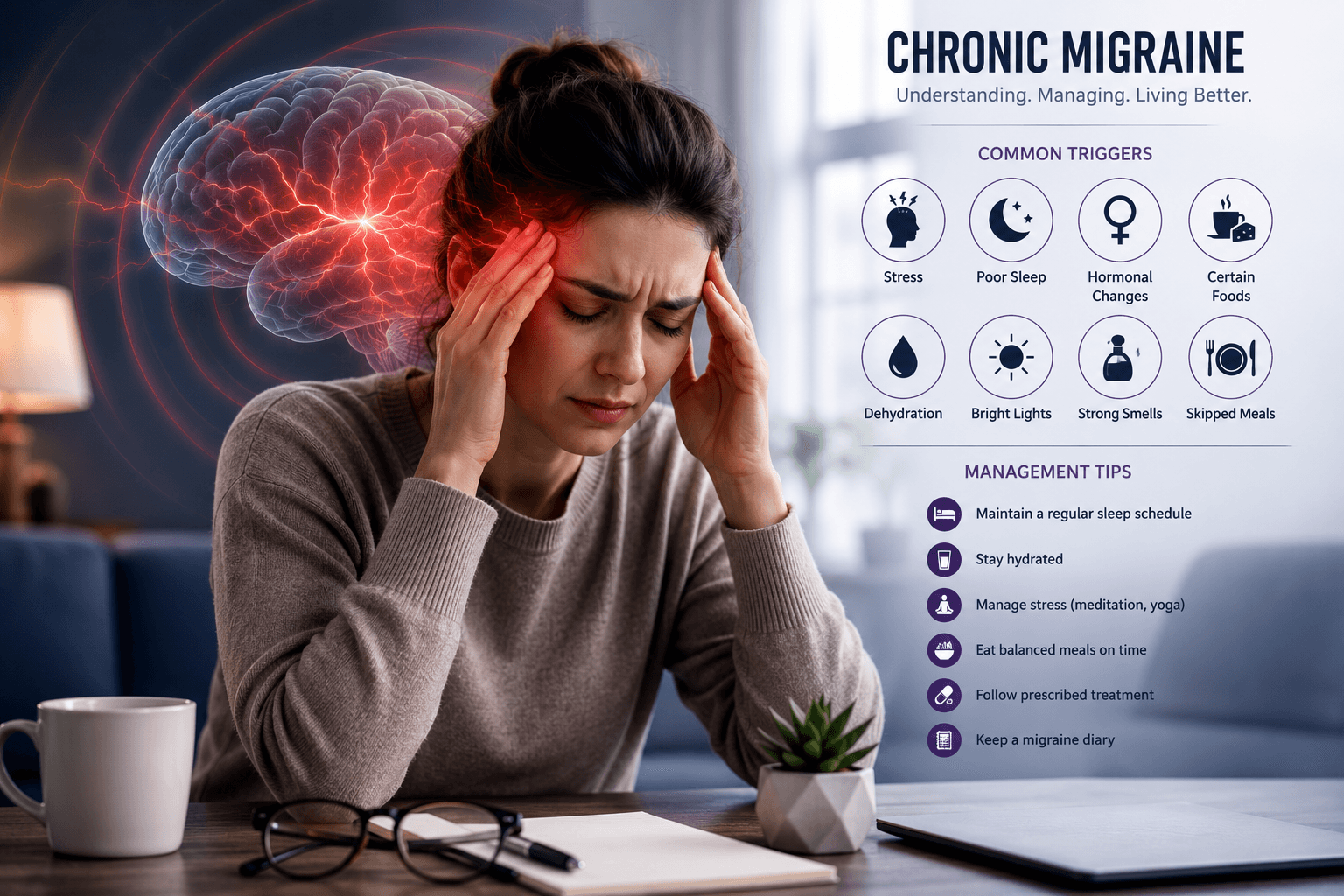
Many people notice that certain situations make migraine attacks more likely. Triggers are personal, can change over time, and do not prove that migraine is “your fault.”
Commonly reported trigger themes
Irregular sleep or significant sleep loss
Skipped meals or dehydration for some people
Hormonal changes around menstrual cycles in some women
Stress peaks and the “let-down” after stress
Strong sensory stimuli such as bright light or strong smells
Weather or altitude changes for some individuals
How to track triggers usefully
A simple diary noting date, sleep, meals, stress, hormones, and attack severity can reveal patterns. Avoid extreme restriction diets or lifestyle changes based on websites alone.
If I avoid all triggers, will migraine stop?
Not necessarily. Avoidance can help some people reduce risk but cannot guarantee freedom from attacks.
Are food triggers the same for everyone?
No. Suspected food triggers vary widely and should be interpreted carefully with clinical guidance.
Can medicines be a factor?
Sometimes medicines or overuse patterns matter. Never start, stop, or change prescriptions based on article content alone.
Related Conditions
Related Videos

Author and medical reviewer
Dr. Amjad Iqbal
Consultant Neurologist
Dr. Amjad Iqbal provides evidence-based assessment and treatment for conditions affecting the brain, spinal cord, nerves, and muscles, with a focus on clear guidance and compassionate follow-up.
Qualifications
MBBS • FCPS Medicine • FCPS Neurology • MRCP (UK)
Areas of expertise: Headache and migraine, Stroke, Epilepsy, Memory disorders, Movement disorders, Neuromuscular conditions.